Pregnancy Danger Signs: When to Go to Hospital Immediately
Know the pregnancy danger signs that need urgent care: heavy bleeding, severe headache, blurred vision, reduced baby movements and more. Act fast.
Medically reviewed by Dr. Sharmin Jahan Shawon, MBBS, FCPS (Part 1), MS (Phase B) · Reviewed on 1 November 2026
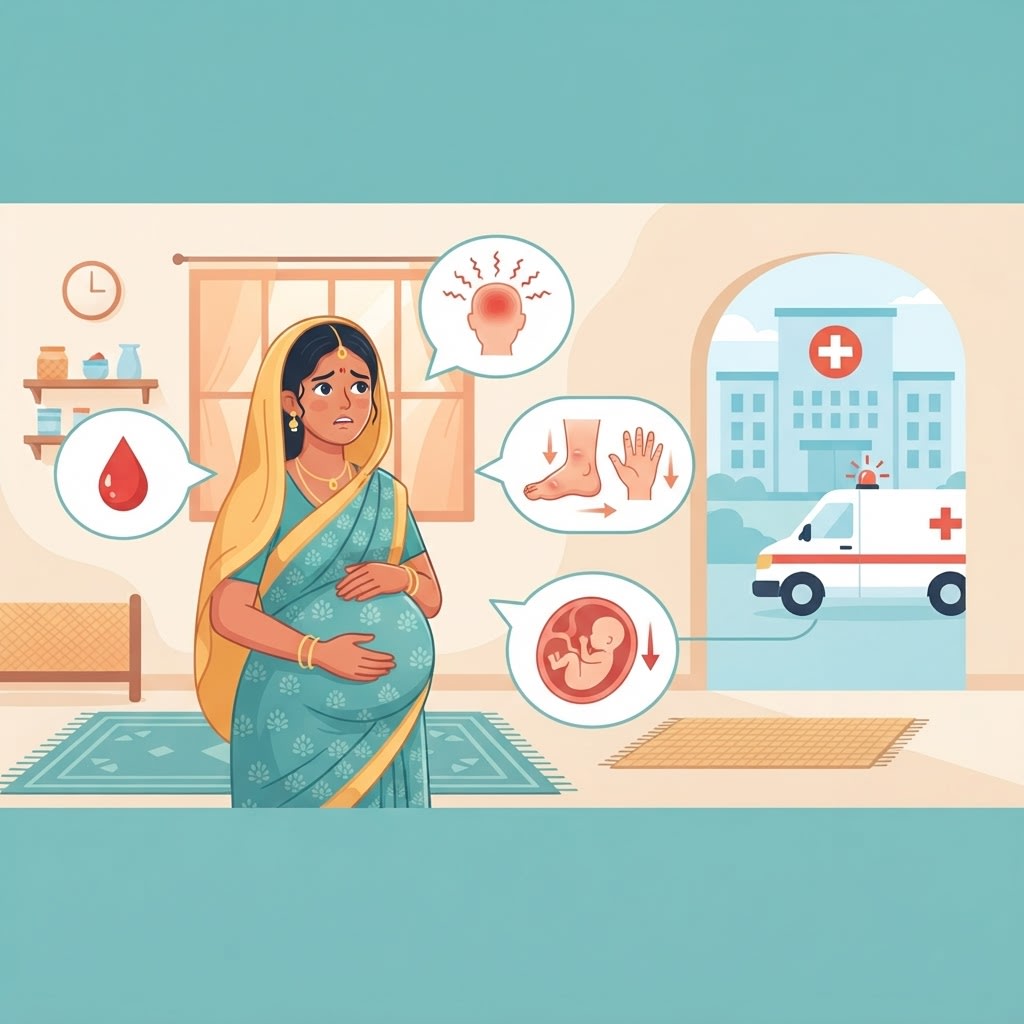
⚠️ If you are pregnant and have heavy bleeding, severe tummy pain, a fit, fainting, a severe headache with blurred vision, or your baby has stopped moving — go to the nearest hospital now or call 999. Do not wait for an online reply.
Pregnancy is a time of joy, but it also brings worry. Every small pain or change makes you wonder: "Is this normal?" Many symptoms are part of a healthy pregnancy. A few are danger signs that need care within minutes or hours.
The WHO says that in 2023, over 700 women died every day from preventable causes related to pregnancy and childbirth, and that care by skilled health professionals before, during and after childbirth can save the lives of women and newborns. Knowing the danger signs — and acting quickly — is one of the most important things a family can do.
This guide is for pregnant women and the family members who support them.
Pregnancy Danger Signs at a Glance
Go to hospital immediately or call 999 if you have:
- Heavy vaginal bleeding — soaking a pad soon after putting it on, or with clots
- Bleeding with severe tummy pain, shoulder pain, or feeling faint, dizzy or passing out
- Severe headache that won't go away, especially with blurred vision or flashing lights
- Sudden swelling of the face, hands or feet
- Fits (seizures) or loss of consciousness
- Your baby moving less, a change in pattern, or no movements
- Severe pain below the ribs
- Difficulty breathing, chest pain
- High fever, or feeling very unwell
- Fluid leaking from the vagina before labour is due
Each of these is explained below.
1. Vaginal Bleeding
The NHS says bleeding in pregnancy is not always serious, but can sometimes need urgent treatment. It describes:
- Spotting — spots of pink, red or brown blood
- Light bleeding — may need a pad
- Heavy bleeding — red blood soaking through a pad, possibly with clots
Call 999 / go to hospital now if bleeding comes with (NHS):
- Severe tummy pain — you can't focus on TV, reading or daily tasks
- Pain in your shoulder
- Feeling sick, faint, dizzy or losing consciousness
- Heavy bleeding — soaking a pad soon after putting it on
Get urgent medical help the same day if:
- You have light bleeding or spotting, even with no pain or mild pain
Any bleeding in pregnancy should be checked by a doctor or midwife.
2. Early Pregnancy: Ectopic Pregnancy Warning
The NHS explains that an ectopic pregnancy is when a fertilised egg implants outside the womb, usually in a fallopian tube. It cannot develop into a baby, and the woman's health may be at risk. Symptoms tend to develop between the 4th and 12th week and can include a missed period with tummy pain low down on one side, vaginal bleeding, and shoulder-tip pain.
Severe one-sided tummy pain, shoulder-tip pain, fainting or dizziness in early pregnancy is an emergency.
3. Pre-eclampsia: High Blood Pressure in Pregnancy
Pre-eclampsia is a serious condition. The NHS says early signs are high blood pressure and protein in the urine, which you usually won't notice yourself — that's why BP and urine checks at every antenatal visit matter.
Other symptoms (NHS):
- A severe headache that doesn't go away with simple painkillers
- Vision problems — blurred vision or flashing lights
- Pain below the ribs
- Sudden swelling of the face, hands or feet
- Feeling very unwell
- Heartburn that doesn't go away with heartburn medicine
- Vomiting
The NHS says any of these can be serious and need to be checked immediately. Pre-eclampsia is most likely from 20 weeks onwards, but it can happen at any point — and sometimes in the days or weeks after birth.
Example
Sharmin, 24, is 32 weeks pregnant with her first baby in a village near Jessore. One evening she gets a pounding headache, sees spots in front of her eyes, and her face and hands look puffy. Her mother-in-law thinks it's tiredness. Her husband remembers the warning signs from her antenatal card and takes her to the upazila health complex that night. Her BP is very high. Fast action like this can save both mother and baby.
4. Your Baby's Movements
The NHS says:
- You should start to feel your baby move between 16 and 24 weeks. With a first baby, it may be after 20 weeks.
- If you haven't felt movements by 24 weeks, tell your doctor or midwife.
- You should feel your baby move right up to and during labour.
Get help immediately if (NHS):
- Your baby is moving less than usual
- You can't feel your baby moving anymore
- There's a change in the usual pattern of movements
The NHS is clear: do not wait until the next day — get help immediately, even in the middle of the night.
Things to know
- There's no set number of kicks — learn your baby's usual pattern
- The NHS warns not to use a home doppler (heartbeat listening device) to reassure yourself
5. Other Serious Warning Signs
Go to hospital urgently for:
- Fits or seizures
- Severe breathlessness or chest pain
- High fever or shivering — infections in pregnancy need prompt care
- Fluid leaking or gushing from the vagina before your due date
- Severe vomiting — unable to keep any fluids down, very little urine
- Burning urine with fever or back pain — the NHS lists pregnancy as a reason to get urgent advice for a suspected UTI
- Thoughts of harming yourself or your baby — seek help urgently
Danger Signs After Birth
Pre-eclampsia can develop after birth (NHS). Also seek urgent care for heavy bleeding, fever, severe headache, breathlessness, painful swollen leg, or foul-smelling discharge after delivery.
Make a Birth Preparedness Plan
Before an emergency happens, prepare:
- Know your nearest hospital with emergency obstetric care — and how to get there at night
- Save emergency numbers: 999 (national emergency), your doctor's number, and a local ambulance
- Arrange transport in advance — a CNG, car or ambulance contact
- Keep money aside for emergencies
- Identify a blood donor in the family who knows your blood group
- Keep your antenatal card and reports in one bag, ready to go
- Make sure family members know the danger signs — many emergencies are first noticed by others
Antenatal Check-Ups Save Lives
The WHO says skilled care before, during and after childbirth saves lives. Regular antenatal visits allow:
- Blood pressure and urine checks for pre-eclampsia
- Haemoglobin checks for anaemia
- Baby's growth and position checks
- Planning for a safe delivery
Attend all check-ups even if you feel well.
Can an Online Doctor Help During Pregnancy?
For non-urgent questions — such as mild nausea, understanding a routine report, or questions about common discomforts — an online consultation can be helpful.
But online care is not suitable for any danger sign. These need in-person assessment: blood pressure measurement, examination, scans and monitoring of the baby.
Related reading: Anaemia is common in pregnancy — see iron deficiency anaemia symptoms. Learn about UTI symptoms in women, and in mosquito season know the dengue symptoms and warning signs, as pregnant women are at higher risk.
Frequently Asked Questions
What are the danger signs in pregnancy?
Heavy bleeding, severe tummy pain, severe headache with vision problems, sudden swelling, fits, reduced baby movements, high fever and leaking fluid.
Is spotting in early pregnancy normal?
It can happen, but the NHS advises getting urgent advice for any bleeding.
What should I do if my baby moves less?
Get help immediately — the NHS says don't wait until the next day.
Can headache in pregnancy be dangerous?
A severe headache that doesn't settle, especially with blurred vision or swelling, can be a sign of pre-eclampsia. Get checked immediately.
When does pre-eclampsia happen?
Most likely from 20 weeks of pregnancy onwards, but it can happen anytime, including after birth (NHS).
Is swelling in pregnancy normal?
Mild swelling of the feet is common. Sudden swelling of the face, hands or feet needs urgent checking.
Non-Urgent Pregnancy Questions? ShifaMate Can Help
For non-urgent questions during pregnancy, you can consult a verified doctor through ShifaMate and share reports or questions by text, photos or voice messages. You can also browse ShifaMate doctors.
ShifaMate is not an emergency service. For any pregnancy danger sign, go to the nearest hospital immediately or call 999.
References
- NHS. Vaginal bleeding in pregnancy
- NHS. Pre-eclampsia
- NHS. Your baby's movements
- NHS. Ectopic pregnancy
- NHS. Urinary tract infections (UTIs)
- World Health Organization. Maternal mortality (fact sheet)
This article is for general information and does not replace advice from a qualified doctor.
Sources
Last updated: 2 November 2026
This article is general health information, not medical advice for any individual. For your own situation, consult a registered doctor. In an emergency, go to the nearest hospital without delay.