Air Pollution Health Effects: Protecting Your Lungs and Heart in Dhaka
Air pollution harms the lungs, heart and children's health. Learn the health effects, who is most at risk in Dhaka, daily protection and when to get help.
Status: Pending Qualified Medical Review. This article has not yet been reviewed by a qualified medical professional.
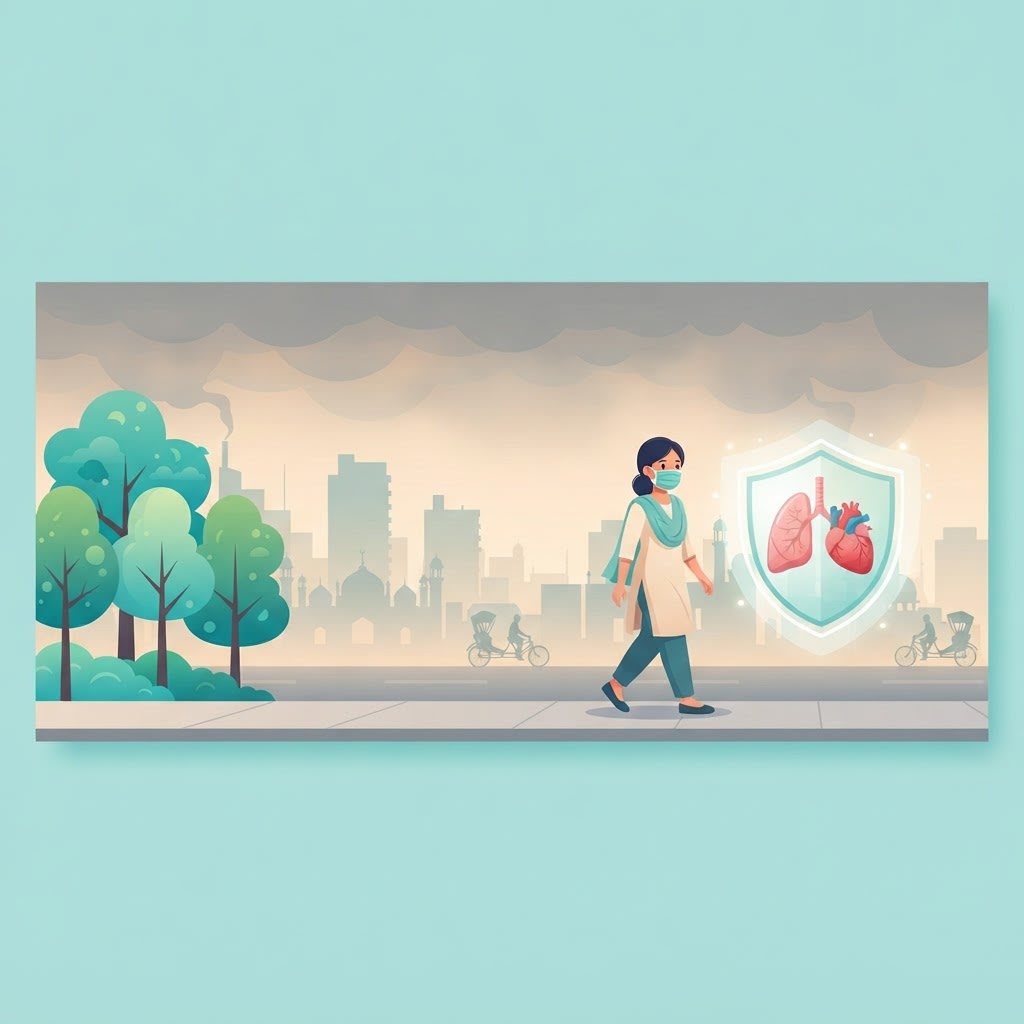
If you live in Dhaka, you have seen it — grey haze over the city in winter, dust from construction and roads, smoke from brick kilns and traffic. Many people accept a constant cough, sore throat or itchy eyes as normal city life.
But air pollution is more than an inconvenience. The WHO calls it one of the greatest environmental risks to child health, and links it to heart disease, stroke, lung disease and cancer. This guide explains the main air pollution health effects, how polluted air affects your body, who is most at risk, and practical steps families can take — while recognising that most pollution sources need action by governments, not just individuals.
How Big Is the Problem?
According to the WHO:
- In 2019, 99% of the world's population lived in places where WHO air quality guideline levels were not met.
- Outdoor air pollution caused an estimated 4.2 million premature deaths worldwide in 2019.
- 89% of those deaths occurred in low- and middle-income countries, with the greatest burden in the WHO South-East Asia and Western Pacific regions. Bangladesh is in the WHO South-East Asia Region.
- Outdoor and household air pollution together are associated with 6.7 million premature deaths every year.
What Is in Polluted Air?
The WHO explains that much of the harm comes from fine particulate matter — tiny particles often called PM2.5. They are small enough to go deep into the lungs and enter the bloodstream.
Common sources around Dhaka and other cities
- Vehicle exhaust, especially older diesel vehicles
- Brick kilns around the city
- Construction dust and road dust
- Burning waste
- Industrial emissions
Household air pollution
Pollution indoors matters too. The WHO says about 2.1 billion people worldwide cook with open fires or inefficient stoves using wood, animal dung, crop waste, kerosene or coal. In rural Bangladesh, cooking with wood, leaves, jute sticks or dung cakes is still common.
The WHO estimates household air pollution caused 2.9 million deaths in 2021, including over 309,000 children under 5. It also says women and children, who usually do the cooking and collect fuel, bear the greatest burden.
Air Pollution Health Effects
Long-term effects
The WHO says fine particle pollution causes cardiovascular and respiratory disease, and cancers. Of outdoor air pollution–related premature deaths in 2019, the WHO estimates:
- 68% were from ischaemic heart disease and stroke
- 14% from chronic obstructive pulmonary disease (COPD)
- 14% from acute lower respiratory infections (such as pneumonia)
- 4% from lung cancer
Many people think pollution only affects the lungs. In fact, heart disease and stroke make up the biggest share.
Household air pollution is also linked by the WHO to stroke, heart disease, COPD and lung cancer.
Short-term symptoms people commonly notice
On high-pollution days, people often report:
- Cough and throat irritation
- Itchy, watery eyes
- Runny or blocked nose (easy to confuse with a cold; see cold vs flu)
- Chest tightness or wheezing, especially in people with asthma
- Breathlessness on exertion
- Headache and tiredness
The NHS lists high levels of air pollution as a trigger for asthma symptoms.
Who Is Most at Risk?
- Children — the WHO highlights air pollution as a major risk to child health. Their lungs are still developing and they breathe more air for their size
- Older adults
- Pregnant women
- People with asthma, COPD, heart disease or diabetes
- Outdoor workers — rickshaw pullers, traffic police, street vendors, construction workers, delivery riders
- Women and children exposed to cooking smoke at home
Example
Jamal, 58, a former smoker who drives a CNG auto-rickshaw in Dhaka, has a cough every winter that lasts for months. He gets breathless climbing stairs. His family thinks it's "just dust". A doctor suspects a chronic lung condition and arranges tests. Long exposure to traffic pollution, plus his smoking history, both raise his risk.
Practical Ways to Protect Yourself and Your Family
The WHO is clear that most sources of outdoor air pollution are beyond the control of individuals and need action in transport, energy, industry, waste and urban planning. Still, there are sensible steps that may reduce your exposure.
Check air quality
Use a reliable air quality index (AQI) app or website. On very poor days, plan around it.
Reduce outdoor exposure on bad days
- Avoid heavy exercise outdoors when pollution is high — exercise indoors or at less polluted times
- Avoid walking along busy roads when possible; use side streets
- Keep children's outdoor play to cleaner times of day
Masks
A well-fitting mask may reduce how much dust and particle pollution you breathe in, but fit matters — gaps around the edges let air in. Masks are not a substitute for reducing pollution, and people with heart or lung disease should ask a doctor what is suitable.
At home
- Do not smoke indoors — or at all
- Ventilate the kitchen while cooking: open windows, use an exhaust fan or chimney
- Where possible, move towards cleaner cooking fuels such as gas or electricity, or improved stoves
- Avoid burning rubbish, leaves or mosquito coils in closed rooms
- Keep windows closed during peak pollution hours if outdoor air is worse than indoor air, and air the house when outdoor air is cleaner
- Wet-mop floors rather than dry-sweeping dust into the air
Look after your health
- If you have asthma or COPD, take preventer medicines as prescribed and keep your reliever inhaler with you (check how to use an inhaler correctly)
- Keep blood pressure and diabetes under control — pollution adds to heart risk
- Stop smoking — this is the biggest single step for your lungs
- Keep vaccinations up to date as advised by your doctor
When to See a Doctor
See a doctor if you have:
- A cough that lasts more than 3 weeks
- Breathlessness that is getting worse
- Wheezing or chest tightness
- Asthma that needs your reliever inhaler more often
- A child with frequent chest infections or noisy breathing
Emergency: call 999 or go to hospital
- Severe difficulty breathing
- Chest pain, especially with sweating or pain spreading to the arm or jaw
- Blue or grey lips
- Confusion or extreme drowsiness
- An asthma attack not relieved by the reliever inhaler
Frequently Asked Questions
What are the main health effects of air pollution?
The WHO links air pollution to heart disease, stroke, COPD, lung infections and lung cancer.
Does air pollution affect children more?
Yes. The WHO calls air pollution one of the greatest environmental risks to child health.
Can air pollution cause asthma attacks?
The NHS lists high air pollution as a trigger for asthma symptoms.
Is indoor cooking smoke harmful?
Yes. The WHO links household air pollution from polluting fuels to stroke, heart disease, COPD and lung cancer.
Do masks protect against air pollution?
A well-fitting mask may reduce exposure to particles, but fit is important. Ask a doctor if you have heart or lung disease.
What can I do on a high-pollution day?
Check the AQI, avoid outdoor exercise and busy roads, keep children's outdoor time short, and have your inhaler with you if you have asthma.
Talk to a Doctor About Breathing Problems on ShifaMate
If you have a long-lasting cough, wheezing or breathlessness without emergency signs, you can consult a verified doctor through ShifaMate. Describe your symptoms, how long they've lasted, your work and home exposure, smoking history and any medicines. The doctor can advise on tests and next steps. You can also browse ShifaMate doctors.
For severe breathing difficulty or chest pain, call 999.
References
- World Health Organization. Ambient (outdoor) air pollution (fact sheet)
- World Health Organization. Household air pollution (fact sheet)
- NHS. Asthma
This article is for general information and does not replace advice from a qualified doctor.
Sources
This article is general health information, not medical advice for any individual. For your own situation, consult a registered doctor. In an emergency, go to the nearest hospital without delay.


