Headache Red Flags: Common Headache Types and When to Get Help Fast
Most headaches are harmless, but some need emergency care. Learn headache red flags, common causes, self-care that helps, and when to see a doctor.
Medically reviewed by Dr. Shakilur Rahman, MBBS, FCPS (Part 1), MD (Phase B) · Reviewed on 2 November 2026
Almost everyone gets headaches. After a long day in Dhaka traffic, a skipped lunch, a sleepless night, or hours on the phone, a dull ache is very common. The NHS reassures that most headaches go away on their own and are not a sign of something more serious.
But a small number of headaches are warnings of a serious problem such as stroke, bleeding in the brain or meningitis. Knowing the headache red flags can save a life. This guide covers common headache types, simple self-care, and the signs that mean you should get help quickly.
How Long Do Headaches Last?
The NHS says headaches can last 30 minutes, several hours, or sometimes several days.
Common Causes of Headaches
The NHS lists:
- Cold or flu
- Stress
- Drinking too much alcohol
- Bad posture
- Eyesight problems
- Not eating regular meals
- Not drinking enough fluids (dehydration)
- Taking too many painkillers
- Periods or menopause (hormone headache)
Severe headaches can sometimes be caused by migraine or cluster headache.
Everyday Bangladesh triggers
- Heat and dehydration in summer (see heat stroke symptoms and first aid)
- Fasting during Ramadan, or long gaps without food
- Too little sleep, long working hours
- Screen time — phones and computers
- Caffeine — lots of tea, then missing your usual cup
- Fever from flu, dengue or other infections
Common Types of Headache
Tension-type headache
Often described as a tight band or pressure around the head or forehead, or pain in the neck. It is commonly linked with stress, posture and tiredness.
Migraine
The NHS describes a throbbing headache, often on one side, worse with movement, often with nausea or vomiting and sensitivity to light and sound. Some people get aura — such as zigzag lines or flashing lights. (See our migraine treatment guide.)
Cluster headache
Severe pain, often around one eye, that comes in clusters. The NHS lists it as a cause of severe headache. A doctor should assess it.
Painkiller (medication overuse) headache
The NHS lists taking too many painkillers as a cause of headaches. In its migraine guidance, the NHS advises not taking painkillers for more than 2 days a week, as this can cause more headaches. Many people in Bangladesh take a painkiller every day — and the headache keeps coming back.
Headache with fever or infection
Colds, flu, sinus infections and dengue commonly cause headache. During mosquito season, fever with headache and pain behind the eyes should make you think of dengue.
Self-Care That Helps
The NHS recommends:
Do
- Drink plenty of water
- Rest if you also have a cold or flu
- Try to relax — stress can make headaches worse
- Take paracetamol or ibuprofen (but avoid ibuprofen if dengue is possible)
Don't
- Skip meals
- Sleep more than usual — it can make it worse
- Strain your eyes for a long time, for example looking at a screen
- Drink alcohol
Keep a headache diary
The NHS suggests a headache diary to work out triggers. Note:
- Date, time and how long it lasted
- Where the pain was and how bad (0–10)
- What you ate, drank and did beforehand
- Sleep, stress, periods
- Medicines taken and whether they helped
Example
Imran, 34, an accountant, gets headaches almost every afternoon. His diary shows they come on days he skips lunch, drinks four cups of tea, and spends long hours on his laptop. He takes a painkiller nearly every day. With regular meals, more water, screen breaks and fewer painkillers — and a doctor's review — his headaches become far less frequent.
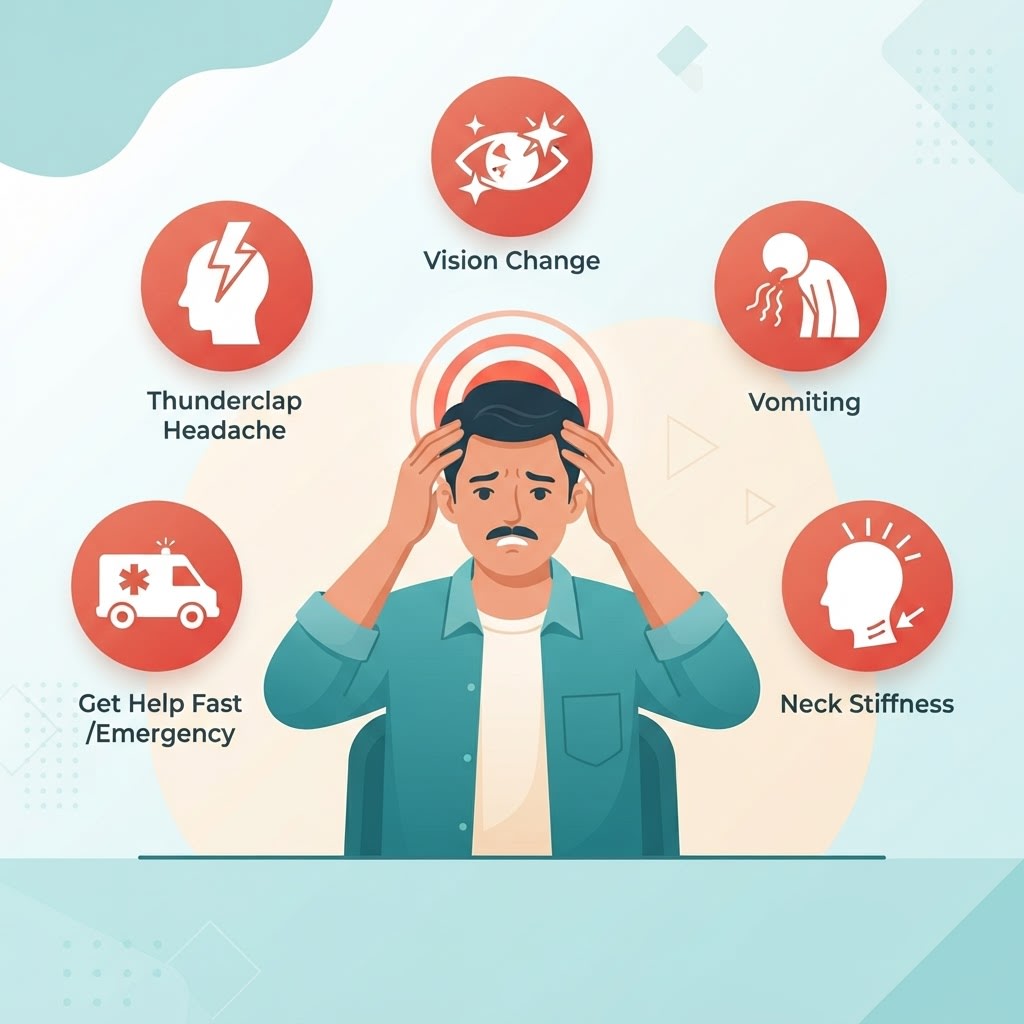
🚩 Headache Red Flags: Call 999 or Go to Hospital Now
The NHS says get emergency help if you or a child has a headache and:
- Has had a seizure (fit)
- Has numbness or weakness in the body or face
- It started suddenly and is extremely painful — sometimes described as "the worst headache of my life"
- Has had a head injury within the last 3 months (for example, a fall or road accident)
- Is finding it difficult to speak, balance, walk or remember things
- Is drowsy or confused
- Has loss of vision
- Has a rash that does not fade when a glass is rolled over it
- Has a very high temperature, a stiff neck, or bright lights are bothering them
These can be signs of stroke, bleeding in the brain, meningitis or other emergencies. Do not wait for an online reply. Do not drive yourself.
Stroke warning: think FAST
- Face drooping on one side
- Arm weakness
- Speech slurred or strange
- Time to call 999
Urgent Signs: See a Doctor the Same Day
The NHS advises an urgent appointment if:
- You or a child has a headache with vision or eye problems
- The headache is triggered or made worse by coughing, sneezing, bending down or exercising
- The headache comes with vomiting
- A child's headache is getting worse or wakes them at night
- You have a headache and jaw pain when eating, or a sore, tender scalp
- There are any other symptoms you're worried about
Also see a doctor if:
- You have very high blood pressure readings with headache (see high blood pressure symptoms)
- You're pregnant and have a severe headache, especially with blurred vision or swelling — this needs urgent care
- You're over 50 with a new type of headache
When to See a Doctor (Non-Urgent)
The NHS says see a doctor if:
- You've tried treating a headache yourself and it's not getting better or is getting worse
- You regularly get headaches
Frequently Asked Questions
What are the danger signs of a headache?
Sudden extremely painful headache, weakness or numbness, trouble speaking, confusion, seizure, vision loss, stiff neck with fever, a non-fading rash, or a recent head injury.
Can high blood pressure cause headaches?
Very high blood pressure can cause headache, but most headaches aren't caused by BP. Measure your BP and seek urgent help if it's very high with symptoms.
Can taking painkillers every day cause headaches?
Yes. The NHS lists taking too many painkillers as a cause of headache.
Is headache with fever dangerous?
Often it's from flu or a cold. But fever with a stiff neck, dislike of light or a rash that doesn't fade is an emergency.
Why do I get headaches when fasting?
Dehydration, low blood sugar, less sleep and missing caffeine can all contribute. Drink enough water between iftar and sehri.
Should I get a brain scan for headaches?
Most headaches don't need a scan. A doctor decides based on red flags and examination.
Talk to a Doctor About Your Headaches on ShifaMate
If you get frequent headaches without red flags, you can consult a verified doctor through ShifaMate. Share your headache diary, blood pressure readings, and the medicines you take. The doctor can help identify triggers, advise on safe treatment, and tell you if you need in-person tests. You can also browse ShifaMate doctors.
Any red-flag symptom means call 999 or go to hospital now.
References
This article is for general information and does not replace advice from a qualified doctor.
Sources
Last updated: 2 November 2026
This article is general health information, not medical advice for any individual. For your own situation, consult a registered doctor. In an emergency, go to the nearest hospital without delay.


